2023年11月30日 星期四

In-Depth Guide to Purchasing Traditional Lathes

 In-Depth Guide to Purchasing Traditional Lathes: Key Considerations Shared by Industry Experts


In today's industrial manufacturing sector, selecting the right lathe is pivotal for enhancing production efficiency and ensuring product quality. For businesses and professionals planning to purchase a traditional lathe, understanding the key considerations is crucial. Here are the seven essential factors to consider, as recommended by industry experts:


1. Application and Workpiece Specifications

When choosing a lathe, the first consideration should be the type, size, and material of the workpieces you intend to process. Your choice of lathe should be based on whether it's used for general metalworking, heavy-duty machining, or precision engineering.


2. Lathe Size

The bed length, swing over the bed, and maximum turning diameter of the lathe are critical factors that determine the size of workpieces you can process. Choosing a lathe with the appropriate dimensions ensures that your machining needs are met.


3. Power and Speed Range

Selecting the appropriate speed range based on the material and machining requirements is crucial. Consider the spindle speed of the lathe and whether it offers the suitable speed gears and ranges for your specific needs.


4. Accuracy and Repeatability

Different production requirements call for varying levels of accuracy and repeatability. For applications requiring high precision, choosing a lathe with high accuracy specifications is key.


5. Brand and After-Sales Service

Opting for a well-known brand can generally guarantee better quality and service. Good after-sales service not only provides necessary technical support but also saves on future maintenance and repair costs.


6. Safety Features

Operational safety is an aspect that cannot be overlooked in industrial manufacturing. Ensure that the chosen lathe is equipped with adequate safety features, such as emergency stop switches and guards, which are essential for the safety of the operators.


7. Budget and Price

After considering all technical specifications and functional requirements, your choice should also take into account the budget. Selecting a lathe that fits your budget while meeting all your needs is a wise decision.


Additional Tips

Beyond these basic elements, when selecting a lathe, you should also consider additional accessories, tools, and the expandability of the lathe. These factors can impact your final purchasing decision.


Purchasing a traditional lathe is an important and complex process. With these professional insights, you can make a more informed choice, ensuring that your investment yields the maximum return.

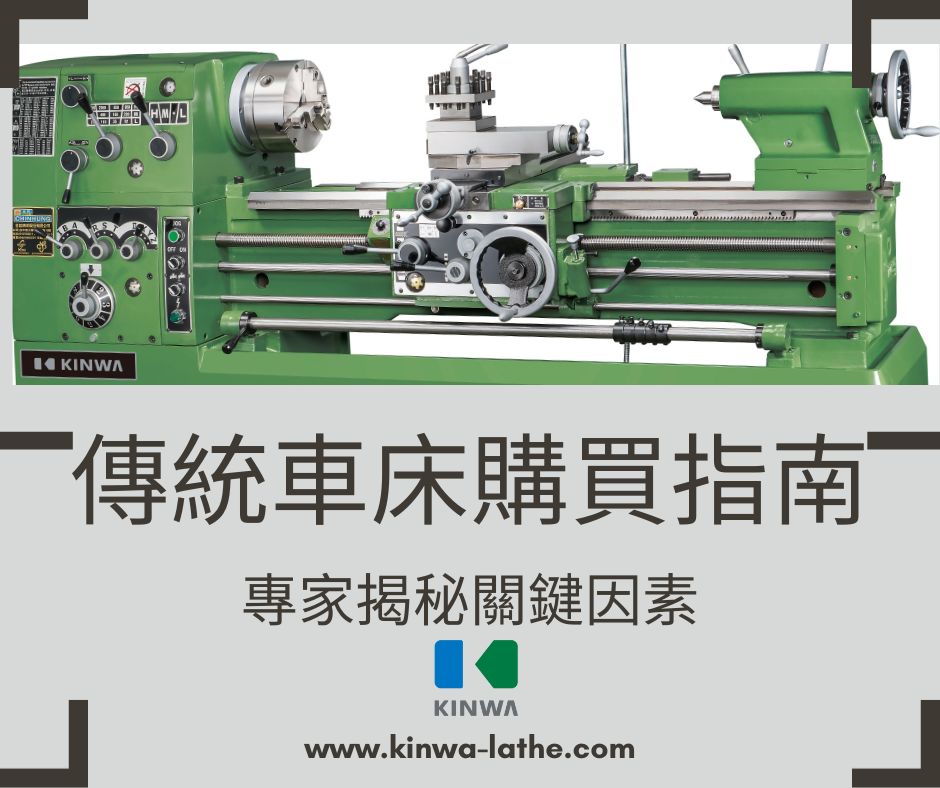
深入解析傳統車床購買

深入解析傳統車床購買:行業專家分享的關鍵考慮因素


在當今的工業製造領域,選擇合適的車床不僅是提升生產效率的關鍵,更是確保產品品質的重要因素。對於正計劃購入傳統車床的企業和專業人士而言,理解購買時需要考慮的關鍵要素至關重要。以下是根據行業專家的建議,整理出的七大考慮要點:


1. 用途與工件規格

在選擇車床時,首先要考慮的是您預期加工的工件類型、尺寸和材料。車床的選擇應根據是否用於一般金屬加工、重型加工還是精密加工等不同需求來決定。


2. 車床尺寸

車床的床身長度、工作台旋徑以及最大旋徑是決定您可以加工工件大小的關鍵因素。選擇適當尺寸的車床能夠確保您的加工需求得到滿足。


3. 動力與速度範圍

根據加工的材料和需求選擇合適的速度範圍至關重要。您應該考慮車床的主軸速度以及是否具備適合您需求的速度檔位和段數。


4. 精度和重覆性

不同的生產要求對精度和重覆性有不同的要求。對於需要高精度加工的應用,選擇擁有高精度規格的車床是非常關鍵的。


5. 品牌和售後服務

選擇知名品牌的車床通常能夠確保更好的品質和服務。良好的售後服務不僅能提供必要的技術支持,還能節省未來維修和維護的成本。


6. 安全功能

操作安全是工業製造中不可忽視的一環。確保選擇的車床裝備了足夠的安全功能,如緊急停機開關和防護罩,這些都是保障操作人員安全的必要條件。


7. 預算和價格

在考慮了所有技術規格和功能要求後,您的選擇還應該考慮預算範圍。選擇一款符合預算且能滿足所有需求的車床是明智的選擇。


附加提示

除了以上基本要素,您在選擇車床時還應該考慮附加配件、工具以及車床的可擴展性等因素。這些都可能會影響您最終的採購決策。


選購傳統車床是一個重要而複雜的過程。透過以上這些專業建議,您可以做出更加明智的選擇,確保您的投資帶來最大的回報。

2023年8月29日 星期二

The Outstanding Role of Traditional Lathes in Modern Manufacturing

Heritage Craftsmanship and Technological Charm: The Outstanding Role of Traditional Lathes in Modern Manufacturing

Amidst the tide of advanced technology in today's manufacturing industry, traditional lathes have emerged as a captivating craft. Despite the gradual rise of CNC lathes, the unique heritage craftsmanship and technological allure of traditional lathes remain undeniable. Through the manipulation of mechanical handwheels and manual operations, traditional lathes demonstrate exceptional turning and threading capabilities, solidifying their position as an excellent choice for processing rotationally symmetric components.

1. Exquisite Craftsmanship:

Operating traditional lathes demands proficient artisanal skills, precise tool manipulation, and an abundance of professional knowledge. Leveraging the finesse of mechanical handwheel manipulation, workpieces gracefully rotate on the spindle, while the toolholder is manually adjusted by the operator for precise cutting. This intricate manual operation imbues each processing step with an artistic significance, ensuring the precision and quality of the finished product. The synergy between artisans' dexterity and extensive experience makes the traditional lathe a tool for crafting art.

2. Fusion of Tradition and Modernity:

Despite the clear advantages of automation and efficiency held by CNC lathes, the flexibility and adjustability of traditional lathes continue to attract customers with unique processing requirements. For non-standard-shaped components, traditional lathes offer adaptability, rendering them the unparalleled choice. This fusion of traditional and modern technology enhances the competitive edge of traditional lathes in the market.

3. Heritage and Technological Allure:

With a history spanning centuries, traditional lathes have witnessed the passing down of techniques through generations. The allure of inherited craftsmanship is deeply embedded in the fabrication of every component, and each operation pays homage to history and continuity. The preservation of craftsmanship is not merely a technical continuation but also the perpetuation of past wisdom, allowing historical value to shine in the modern era.

4. Enhancing Product Quality:

For certain specialized components, traditional lathes remain indispensable. In sectors like aerospace, medical, and high-precision instrument manufacturing, traditional lathes offer heightened accuracy and surface quality during machining, ensuring products meet the highest quality standards. This advantage in exceptional quality positions traditional lathes as indispensable players in critical fields.

5. Future Outlook:

Despite the pressures of competition from CNC lathes, traditional lathes are far from obsolete. Craft enthusiasts and artisans still uphold the traditional lathe as a precious tool, viewing it not only as a manufacturing device but also as a revered asset. Looking ahead, traditional lathes are poised to seamlessly integrate with CNC lathes and other modern machining technologies, unveiling new possibilities. The future of traditional lathes is poised for diversity, evolving into a masterpiece that intertwines modern technology and ancient craftsmanship.


In summary, traditional lathes embody not only the inheritance of craftsmanship but also an inexhaustible technological allure. Their exceptional role in the modern manufacturing industry will continue to be vital as times evolve. Whether as a testament to the past or a revelation of the future, traditional lathes will persist in guiding the development of manufacturing, scripting a new chapter in the legend of craftsmanship. Let us collectively witness the resplendence of this remarkable skill in the future!

傳統車床在現代製造業中的卓越地位

傳承工藝與技術魅力:傳統車床在現代製造業中的卓越地位

現今高科技製造業的浪潮中,傳統車床儼然成為一門備受矚目的技藝,雖然逐漸被數控車床所取代,然而其獨特的工藝傳承和技術魅力卻依然不容忽視。透過機械手輪及手動操作,傳統車床展現出非凡的車削和螺紋加工能力,使其成為加工旋轉對稱零件的卓越選擇。

  1. 精湛工藝
    傳統車床的操作需要操作者精湛的手藝技能,精確的刀具操控以及豐富的工藝專業知識。透過機械手輪靈巧的操控,工件在主軸上輕盈旋轉,刀架隨操作者手動微調進行切削。這層細緻的手工操作賦予每個加工步驟藝術的意味,確保了成品的精密度和品質。工匠們的巧手與豐富的經驗交融,讓傳統車床成為打造藝術品的工具。

  2. 傳統與現代的交融
    儘管數控車床在自動化和效能上具備明顯優勢,然而傳統車床的靈活性與可調性依然吸引著特殊加工需求的客戶。對於非標準形狀的零件,傳統車床能夠彈性調整,成為獨一無二的最佳選擇。這種傳統與現代技術的融合,使得傳統車床在市場中獨具競爭力。

  3. 傳承與技術魅力
    傳統車床的歷史悠久,技術代代相傳已有數百年之久。代代相傳的技術魅力深植於每一個零件的加工中,每次操作都是對歷史的敬意與繼承。技藝的傳承不僅僅是技術上的繼續,更是對過去智慧的延續,讓過去的價值在現代得以綻放。

  4. 提升產品品質
    對於某些特殊要求的零件,傳統車床仍屬不可或缺。在航空、醫療和高精度儀器製造等領域,傳統車床能夠提供更高的加工精準度和表面品質,確保產品達到最高品質水準。這種卓越品質的優勢,使得傳統車床在關鍵領域中扮演著不可或缺的角色。

  5. 未來展望
    傳統車床雖然受到數控車床競爭的壓力,但其並未走向式微。仍有一些工藝愛好者和匠人堅守傳統車床,視其為珍貴的工具,不僅僅是加工設備。展望未來,傳統車床將與數控車床及其他現代加工技術完美結合,開創更多可能性。傳統車床的未來將更加多元,成為現代技術和古老工藝交織的傑作。

        總結來說,傳統車床不僅代表著工藝的傳承,更蘊含著無限的技術魅力。它在現代製造業中的卓越地位,將會隨著時代的演進持續發揮重要作用。無論是過去的見證,抑或是未來的啟示,傳統車床將繼續引領著製造業的發展,譜寫著工藝傳奇的新篇章。讓我們共同見證這一卓越技藝在未來的輝煌!

2023年8月10日 星期四

Lathe Categorization Deciphered: Exploring Diverse Functions from Traditional to CNC

Expert Insights into Machine Tool Knowledge: Exploring Lathe Categories and Applications

[This image of the large-sized lathe]

Machine tools play a pivotal role in the manufacturing sector, and among these tools, the lathe stands out as a common and indispensable machine tool. The lathe is renowned for its capability to process symmetrical components, and based on its distinct characteristics, we can categorize lathes into several primary types, each of which we will delve into.

1. Functional Classification:

  • Conventional Lathe:
    This type of lathe employs mechanical handwheels or manual controls to finely manage the cutting process. While it requires the operator's direct involvement, conventional lathes remain a practical choice in specific contexts.

  • CNC Lathe (Computer Numerical Control Lathe):
    Equipped with a computer numerical control system, CNC lathes can automatically govern the cutting process. This not only enhances production efficiency but also ensures higher machining accuracy, rendering them an integral part of modern manufacturing.

2. Structural Classification:

  • Flat Bed Lathe:
    In flat bed lathes, the tool post remains parallel to the ground, and the workpiece is positioned on a horizontal bed. This design provides enhanced stability for operations, making it suitable for a variety of machining tasks.

  • Slant Bed Lathe:
    In slant bed lathes, the tool post is angled, and the workpiece is positioned on a tilted bed. This unique structure aids in the more efficient expulsion of chips, consequently elevating machining efficiency.

  • Vertical Lathe:
    The tool post in vertical lathes is perpendicular to the ground, and the workpiece is processed on a vertical spindle. This design is commonly employed for specific machining requirements, such as hole drilling.

3. Capability Classification:

  • Single-Axis Lathe:
    Capable of machining solely along a single coordinate axis, single-axis lathes have limited capability. Nevertheless, they find utility in simple component machining tasks.

  • Multi-Axis Lathe:
    Multi-axis lathes can simultaneously operate on multiple coordinate axes, providing enhanced machining versatility and flexibility. This is particularly critical for the machining of intricate components.

4. Size-based Classification:

  • Small-Sized Lathe:
    Suited for machining small-sized components, these lathes are ideal for precision work.

  • Medium-Sized Lathe:
    Suitable for processing medium-sized components, medium-sized lathes find widespread application across various industrial sectors.

  • Large-Sized Lathe:
    Designed to handle larger components, such as propeller shafts, large-sized lathes accommodate greater dimensions and weights.

5. Process-based Classification:

  • Conventional Lathe:
    Primarily employed for flat, cylindrical, and helical surface machining, conventional lathes enjoy a broad application spectrum, making them the preferred choice for many machining tasks.

  • Specialized Lathe:
    Utilized for shaping components with unique shapes or purposes, such as multi-axis lathes and thread-cutting lathes, these machines are adept at tackling more challenging machining operations.


Different types of lathes offer distinct advantages in various scenarios. By comprehending specific requirements, we can better select the appropriate lathe, ensuring efficient and precise machining processes. Whether it's a conventional lathe or an advanced CNC lathe, they all play pivotal roles in modern manufacturing.

2023年8月9日 星期三

車床分類解析:從傳統到數控,探索多樣功能

專業工具機知識分享:探索車床分類及其應用

[此圖片為大型車床]

工具機在製造領域扮演關鍵角色,而其中一款常見且不可或缺的工具機就是車床車床以其加工對稱零件的能力而聞名,而根據其不同特性,我們可以將車床分為幾個主要的類別,以下將一一介紹。

1. 基於功能的分類:

  • 傳統車床:
    這種車床使用機械手輪或手動操作,精細地控制切削過程。雖然需要操作者的實際參與,但在一些特定情境下,傳統車床仍然是一個實用的選擇。

  • 數控車床(CNC車床):
    配備了電腦數控系統的數控車床,能夠自動控制切削過程。這不僅提高了生產效率,還能確保更高的加工精度,使其成為現代製造業的不可或缺的一部分。

2. 基於機床結構的分類:

  • 平台式車床:
    刀架與地面平行,工件放置在水平的床身上。這種設計使得操作更加穩定,適用於許多不同的加工工作。

  • 斜床式車床:
    刀架傾斜,工件放置在傾斜的床身上。這樣的結構有助於更有效地排出切屑,提高加工效率。

  • 立式車床:
    刀架垂直於地面,工件在垂直主軸上進行加工。這種設計常用於特定的加工需求,如孔加工。


3. 基於加工能力的分類:

  • 單軸車床:
    只能在單一座標軸上進行加工。雖然加工能力有限,但對於某些簡單的零件加工依然有其用途。

  • 多軸車床:
    能夠同時在多個座標軸上進行加工,提供了更多的加工多樣性和靈活性。這對於複雜零件的加工至關重要。


4. 基於加工尺寸的分類:

  • 小型車床:
    適用於加工小尺寸零件,是精細加工的理想選擇。

  • 中型車床:
    適合處理中等尺寸的零件,是廣泛應用於多種工業領域的車床。

  • 大型車床:
    專為大型零件(如螺旋槳軸等)的加工而設計,能夠應對更大的尺寸和重量。


5. 基於加工方式的分類:

  • 普通車床:
    主要用於平面、圓柱面和螺旋面的加工。其廣泛的應用範圍使其成為許多加工工作的首選。

  • 特殊車床:
    用於特殊形狀或用途的零件加工,如多軸車床、螺紋車床等。這些車床能夠應對更具挑戰性的加工工作。


不同類型的車床在不同情境下都有其獨特的優勢。透過對特定需求的了解,我們可以更好地選擇合適的車床,以確保加工過程的高效和精確。無論是傳統車床還是先進的數控車床,都將在現代製造業中扮演著重要的角色。

2023年8月4日 星期五

What is the Lathe?

What is the Lathe? The Concept of Turning Process


The lathe, also known as a turning machine, is a type of machine used for performing turning operations.

Turning process refers to the method of cutting and shaping an object's surface by rotating the object itself and using cutting tools, resulting in a smooth and symmetrical shape.


This process is somewhat similar to the hand-throwing process in pottery making. Just like when crafting pottery, the clay keeps rotating, and the artisan shapes the clay into a symmetrical form by hand. Additionally, any rough or uneven parts can be smoothed out using bamboo strips to create a polished appearance.

[The image was generated by Playground AI]


In the turning process, the object being worked on is referred to as the "workpiece," while the tools used for cutting are called "tools" or "cutting tools."

To secure the rotating workpiece, a "fixture" or "clamping device" is utilized, and the axis that enables the rotation of the workpiece is known as the "spindle."

Lathes can be classified into two types: vertical lathes and horizontal lathes. The "vertical lathe" has its spindle oriented vertically, while the "horizontal lathe" has its spindle parallel to the ground.

Both vertical and horizontal lathes have their respective applications, used for different types of turning operations.

#Lathe #Turning  #Cutting Tools  #Workpiece #Fixture #Spindle #Machining

KINWA Lathe: A Fifty-Year Legacy of Corporate Spirit and Innovation

  KINWA (KINWA Lathe): A Fifty-Year Legacy of Corporate Spirit and Innovation The Spirit of Sustainable Management:  K eeping Since its esta...